
Cellphone Use While Driving in Spanish-Speaking South America
Highlights
- Across the nine Spanish-speaking countries covered, drivers should expect restrictions on manual phone use; hands-free exceptions differ.
- Penalties and fines vary: the article reports Chile at 1.5–3 UTM plus possible suspension, Colombia at 15 SMLDV (about COP 633,232 in Bogotá for 2026), Ecuador at 10% of SBU plus three points, and Peru at 8% of UIT.
- Some places add points or suspension; AR and BO have notable local variation, and current fine amounts could not be reliably confirmed for Bolivia or Venezuela.
Scope and language note
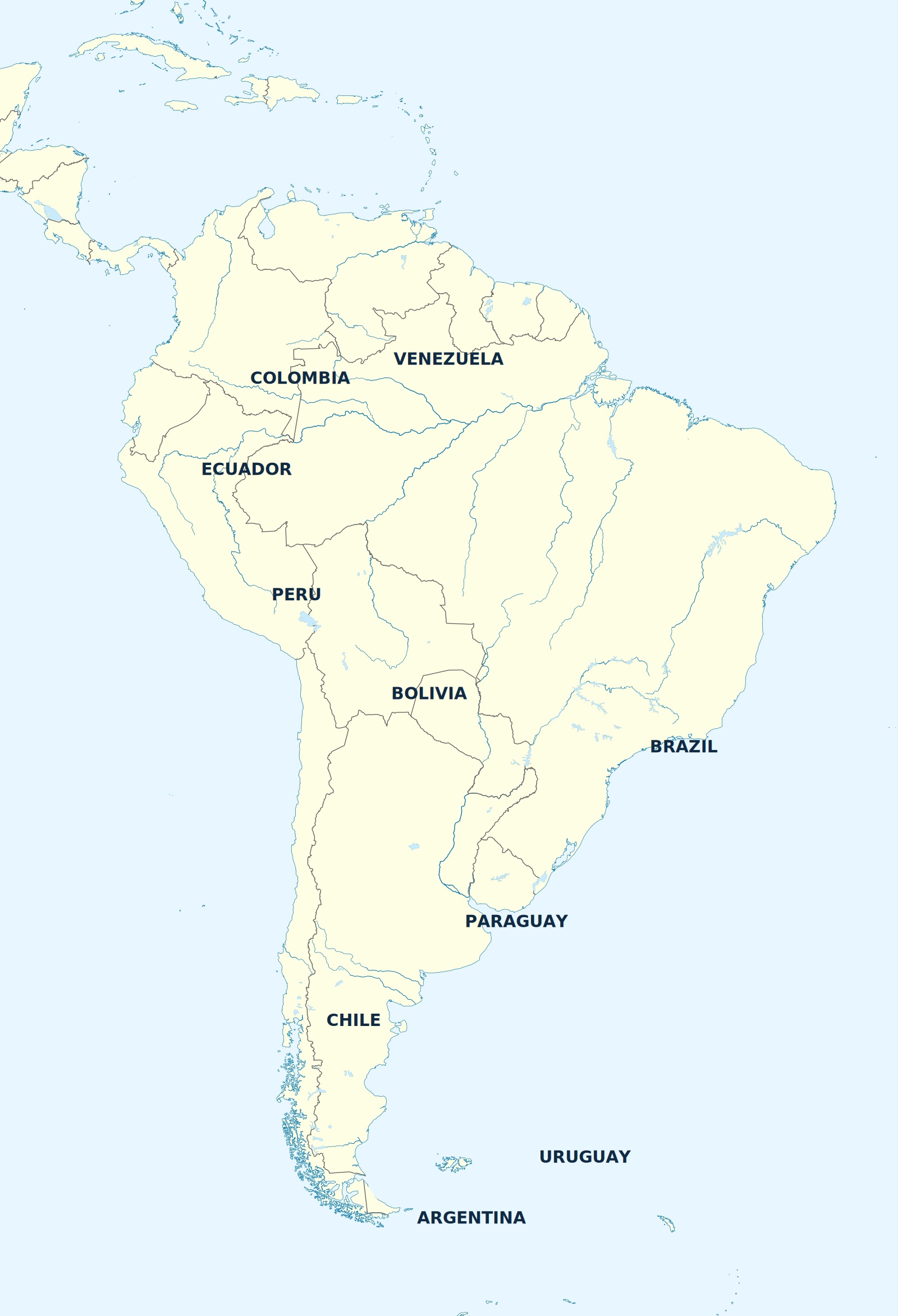
This overview covers the nine South American sovereign countries where Spanish is an official or predominant national language: Argentina (AR), Bolivia (BO), Chile (CL), Colombia (CO), Ecuador (EC), Paraguay (PY), Peru (PE), Uruguay (UY), and Venezuela (VE).
South America is multilingual. Brazil’s official language is Portuguese; Guyana’s is English; and Suriname’s is Dutch. They are not covered here because this review was limited to Spanish-language research. French Guiana is a French-speaking territory of France, not a sovereign South American country, and is also outside the comparison.
What is broadly shared
The practical pattern across the countries reviewed is that drivers should not handle or manually operate a phone while driving. Many laws expressly allow hands-free communication, but the permitted setup and what counts as “driving” vary. Some laws focus on keeping both hands on the wheel; others prohibit manipulating a phone or any digital device even when the driver’s hands remain available.
The word “driving” often includes waiting at a traffic light or being in a traffic queue. Chile and Colombia explicitly treat a red light or congestion stop as part of driving for the cellphone restriction. A vehicle being temporarily stopped is therefore not a reliable excuse to pick up a phone. Peru’s regulation allows phone use when a vehicle is parked and its engine is off; that is different from pausing in a live traffic lane.
A country-by-country overview
| Country | Main rule and notable distinction |
|---|---|
| Argentina (AR) | National law prohibits driving while using headphones or continuous manual communication systems. Provinces and cities set enforcement and fine schedules. In the City of Buenos Aires (CABA), manipulating a phone is fined in fixed units; official local case law says the offence can apply when stopped at a red light. |
| Bolivia (BO) | The national traffic framework and local rules address phone distraction, but the sources reviewed did not establish one current, uniform nationwide phone-specific fine. La Paz expressly lists using a phone or other object that prevents keeping both hands on the wheel; Tarija has its own municipal law and escalating sanctions. Check the city or municipality. |
| Chile (CL) | The “No Chat” law prohibits manipulating a phone or other non-factory electronic/digital device while driving, except through a compliant hands-free system. It explicitly applies at red lights and in traffic queues. The offence is very serious: 1.5–3 UTM and possible licence suspension; repeat cases can lead to a longer suspension. |
| Colombia (CO) | Phone use is allowed only through hands-free accessories or auxiliary equipment. The Bogotá mobility authority says this applies during ordinary driving and momentary stops such as a red light or traffic congestion. The published national penalty is 15 daily minimum-wage units (SMLDV); Bogotá reports the 2026 equivalent as about COP 633,232. |
| Ecuador (EC) | The current national traffic offence prohibits phone use while driving without an approved hands-free device. The commonly cited sanction is a fine of 10% of the unified basic salary (SBU) and three points. Confirm the current COIP text and SBU amount because penalty provisions can be amended. |
| Paraguay (PY) | The national traffic law prohibits headphones and continuous manual mobile communication. The transport ministry describes manual voice, text, and data use as a serious offence; it says hands-free calling is permitted under the national law. Asunción’s local rules are broader and can treat tactile or Bluetooth use and other distractions as serious, so municipal rules matter. |
| Peru (PE) | The national traffic code prohibits cellphone or portable-device use when it prevents the driver from keeping both hands on the steering wheel. The device-use offence is classified as serious and carries a fine of 8% of the UIT. Current regulations say manual use is allowed when the vehicle is parked with the engine off; do not treat a red-light stop as parked. |
| Uruguay (UY) | National law prohibits mobile-phone and other communication-device use while circulating unless the communication can take place without using either hand. A 2025 decree classifies manipulating a cellphone as a very serious offence and deducts six points under the national points system. Monetary penalties are administered through applicable traffic schedules. |
| Venezuela (VE) | The national traffic law prohibits using communications equipment while driving, with a hands-free exception; its regulations also prohibit electronic or communication devices when they distract or limit manoeuvring. The statutory penalty sources located use older tax-unit terms, so a current bolívar amount could not be confirmed reliably for this overview. |
Where the rules and penalties differ most
- Hands-free versus no manipulation: Some countries allow hands-free calls (AR, CL, CO, EC, PY, UY, VE), while a narrower “hands-free” exception does not necessarily permit touching the phone to dial, text, scroll, or program a route. Chile’s rule is especially explicit about manipulation of devices.
- Traffic lights and queues: CL and CO explicitly include momentary traffic stops. CABA case law in AR also treats a driver stopped at a red light as still driving. Other local rule wording may differ; safest is to keep the phone untouched until legally parked.
- Who sets the fine: AR and BO show meaningful local variation; local and municipal regulations can add detail. Elsewhere, the national traffic code or national rules provide a more direct baseline, though local authorities may handle tickets.
- Penalty design: Fines may be stated as a percentage of wages (CO, EC), a multiple of a tax or inflation-linked unit (CL, PE), fixed units (CABA), or a traffic-ticket schedule. Some systems add licence points or suspension (CL, EC, UY). Currency equivalents change, so compare the underlying unit and current schedule, not an old converted amount.
Practical advice
Before starting a trip, set the route and audio. Use hands-free features only if local law allows them, and do not touch, read, or type on a phone while in traffic. If you need to handle it, pull fully out of the travel lane and park safely. Check both national and local rules when crossing provincial, departmental, or municipal boundaries.
This is a general overview, not legal advice. Rules and penalty schedules change, and local regulations may be more specific or stricter. Verify current requirements with the relevant transport or traffic authority.
Sources
- Argentina — National Traffic Law 24,449
- Argentina, City of Buenos Aires — Law 451, traffic offences
- Argentina, CABA case law on cellphone use at a red light
- Bolivia — La Paz Municipal Law 15
- Bolivia — Tarija Municipal Law 77
- Chile — National Congress, Law 21.377
- Chile — CONASET No Chat FAQ
- Colombia — Bogotá Mobility Secretariat FAQ
- Colombia — Law 769 of 2002
- Ecuador — COIP article 391
- Paraguay — National Traffic and Road Safety Law 5016/14
- Paraguay — Ministry of Public Works and Communications guidance
- Asunción municipal fines
- Peru — National Traffic Regulation, Supreme Decree 016-2009-MTC
- Peru — official regulation text
- Uruguay — National Traffic Law 18.191
- Uruguay — Decree 181/025, points and offence classification
- Venezuela — Traffic Law, Article 111
- Venezuela — Traffic Regulation, Article 157