
Delivery Apps, Phone Use & Distracted Driving: What Couriers Say, and What the Records Show
- Public driver-group comments describe the strain of juggling multiple delivery apps, deciding when to pause them, and avoiding late or cold orders.
- Couriers interviewed in Toronto described short-lived order offers and new offers arriving while they were already delivering; Uber and DoorDash said safety matters and disputed that they encourage unsafe travel.
- A British Columbia Uber Eats courier was fined $295 after tapping his phone at a red light to accept an order; the court held that the one-touch exception did not cover accepting a delivery offer.
- News and court records document serious delivery crashes in which phone use or app use was alleged or reported, but they do not establish that every crash was caused by distraction.
- Evidence from Facebook groups is limited and anecdotal. The publicly accessible group material located did not include a verifiable first-person account of a crash caused by phone distraction.
Research reflects publicly accessible material reviewed in November 2026. This article summarizes reported comments and proceedings; it is not legal advice.
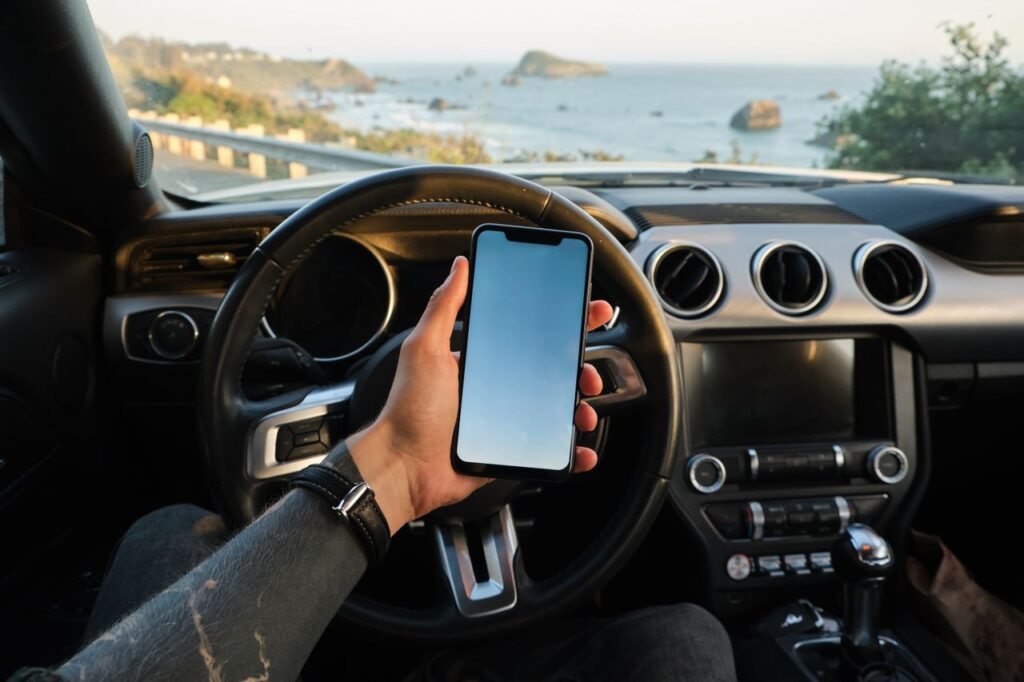
What delivery drivers say about phone demands
Delivery work depends on a phone: drivers receive offers, accept or decline them, follow navigation, communicate with customers and restaurants, and confirm pickups and drop-offs. Those tasks can compete with attention to traffic, especially when an offer appears while a driver is already moving.
One unusually useful public record is an exhibit filed in an Australian Fair Work Commission proceeding. It reproduces posts from the Facebook group “Uber EATS Drivers – Australia.” The discussion is mainly about multi-apping—running Uber Eats and DoorDash at the same time—not a survey of distracted-driving law. Drivers debate whether to pause other apps after accepting an order, worry that overlapping jobs can make food late or cold, and describe the extra stress and confusion of handling more than one app. One commenter described pausing other services after accepting an order on one platform; others said they only accepted overlapping work when the route aligned. These are individual comments, not a representative sample of drivers.
The same exhibit includes a driver’s account of accepting a DoorDash order while carrying an Uber Eats order and then receiving a late-pickup report. That is a reported platform-work conflict, not evidence of a crash or proof that either company instructed the driver to use a phone illegally. The record was submitted by Uber Eats’ director in an employment proceeding, so it should be read as a documentary snapshot with a particular context.
Public access to Facebook group content is uneven; many groups are private or not indexed. We did not locate a verifiable public Facebook-group post in which a delivery driver clearly said a phone distraction caused their crash. The group evidence below is therefore about operational pressure and multitasking, while crash examples come from news reporting and court records.
Why drivers describe mixed messages
In a March 2025 TorontoToday report, bicycle couriers said order offers could disappear after roughly 15 to 25 seconds. One courier said Uber Eats commonly sends new offers while a courier is already travelling with an order, creating another reason to look down at a screen. The report also quoted a courier who found Uber’s dictated notifications and single-tap or swipe interactions helpful. Uber said these features are intended to reduce screen interaction and that stacked orders can help couriers earn more. DoorDash said it does not incentivize Dashers to complete offers faster than appropriate and provides no reward for doing so.
This helps explain why workers may perceive a mixed message: the safety guidance says to focus on the road, while the work process involves alerts, time-sensitive offers, navigation and customer communication. The existence of an offer timer does not by itself establish that a company requires a driver to respond while moving, or that an app interaction is unlawful in every jurisdiction. The practical burden can still be real: a driver may feel that ignoring an offer means missing income, while looking at or touching a phone can create legal and safety risks.
Company guidance emphasizes safer use. DoorDash tells Dashers to check the phone while safely parked and promotes mounts, voice activation or pulling over to message. Uber’s driving guidance promotes mounting a phone, Bluetooth and prepared replies. Such advice can coexist with frequent app prompts; the tension is between the operating environment drivers describe and the safety behavior the companies publicly recommend.
When the law collides with an app interaction
A British Columbia case illustrates how narrow legal exceptions can be. Uber Eats courier Vasu Virda tapped his phone at a red light to accept an order. After an appeal, the conviction was upheld and he was ordered to pay $295. The court concluded that the province’s one-touch hands-free exception applied to specified phone-call functions, not accepting an app-based delivery offer. Virda argued that the app’s short acceptance window made the situation difficult; the court’s decision did not make app use lawful simply because it was part of his work.
The case demonstrates a recurring problem for app-based work: an interaction that feels like a brief work task may still count as prohibited phone handling under local law, even while stopped in traffic. The exact rules vary by jurisdiction and by device, vehicle, and task. Drivers should check the law where they are driving and set up navigation and other functions before moving; when a task requires handling the screen, the safest course is to pull over and park legally.
What the public comments and records suggest
The limited public group discussion located shows drivers managing competing app alerts, route decisions, deadlines and customer expectations. The Toronto interviews add a more direct account of short offer windows and notifications arriving while couriers are underway. Companies, in turn, publish safety advice and describe hands-free or simplified interactions. Together, these sources point to a gap between safety rules and the attention demands of app-based delivery, even though the sources do not prove that platforms generally tell drivers to break the law.
The practical takeaway is straightforward: an app prompt does not override traffic law. Drivers should configure a secure mount and navigation before setting off, use voice controls only where legal and safe, avoid reading or typing while moving, and park before handling an order or customer message. Platforms can reduce the conflict by designing workflows that do not pressure drivers to respond while in traffic and by making safety instructions consistent with how offers and messages actually arrive.
Reporting note: Facebook-group comments are anecdotal and drawn from a publicly filed exhibit; they should not be read as a poll of all couriers. The crash cases are summarized with their procedural status and attributions preserved.
Crash reports: what is established and what remains alleged
Los Angeles: fatal crash while using navigation for a delivery pickup
In 2023, MyNewsLA reported on a civil lawsuit following a Los Angeles crash that killed pedestrian Bing Wang and seriously injured members of his family. According to excerpts from an investigating officer’s deposition cited in court papers, DoorDash driver Vladimir Tishchenko acknowledged using his phone’s navigation app to find the restaurant for a pickup shortly before the collision. The officer testified that witnesses reported speeding and that he attributed the crash to an unsafe left turn and excessive speed. These details were reported from litigation documents; they are not a final court finding that phone use caused the crash. The case is a sobering example of phone use occurring during a delivery trip, but its reported facts should not be overstated.
Indiana: crash during a DoorDash delivery and claims about app use
An Indiana appeals-court case involved a 2020 collision in which a DoorDash driver ran a stop sign while making a delivery, severely injuring another motorist. The injured driver alleged that DoorDash’s app, communications and delivery model encouraged distracted or unsafe driving. In 2025, the Court of Appeals allowed the negligence case against DoorDash to proceed past an early pleadings stage. The ruling addressed whether the claims could go forward, not whether DoorDash was ultimately liable or whether phone distraction caused the crash. It is a legal dispute about platform responsibility, not a final finding of fault against the company.
These accounts are different in evidentiary strength and legal status. A reported admission to phone navigation, a plaintiff’s allegations about app design, and a final finding that a particular phone interaction violated a statute are not interchangeable. Likewise, a crash occurring during a delivery does not on its own establish distracted driving as its cause.
Sources and reporting notes
- Fair Work Commission, Uber witness statements (PDF) — includes screenshots from the “Uber EATS Drivers – Australia” Facebook group discussing multi-apping.
- TorontoToday, “Lane wars: Some cyclists injured, frustrated with ‘erratic’ biking by food delivery couriers” (March 12, 2025) — courier interviews and company responses on offer timing, phone alerts and safety.
- Global News, “Distracted driving? B.C. Uber Eats driver fined $295 for tapping phone to accept order” — reporting on the Virda case.
- MyNewsLA, “LAPD Officer Says DoorDash Driver in Fatal Crash was Using Phone App” (November 28, 2023) — reporting on deposition excerpts and civil allegations.
- Indiana Court of Appeals, Oller v. Culvey / DoorDash — appellate ruling on whether negligence claims could proceed; the decision did not determine ultimate liability.
- DoorDash Dasher Help: Driving Insights and Guide for New Dashers — company safety guidance on phone handling and checking the app while parked.
- Uber Dangerous Driving Policy and Uber Help: Improving Driving Behaviors — platform policies and safer phone-use suggestions.